Bringing Science to Life
A professional development program for science teachers.
This course is not currently scheduled. Science teachers are encouraged to look
at our Foundation Course or Other Courses for similar trainings.
The Intent of the Program
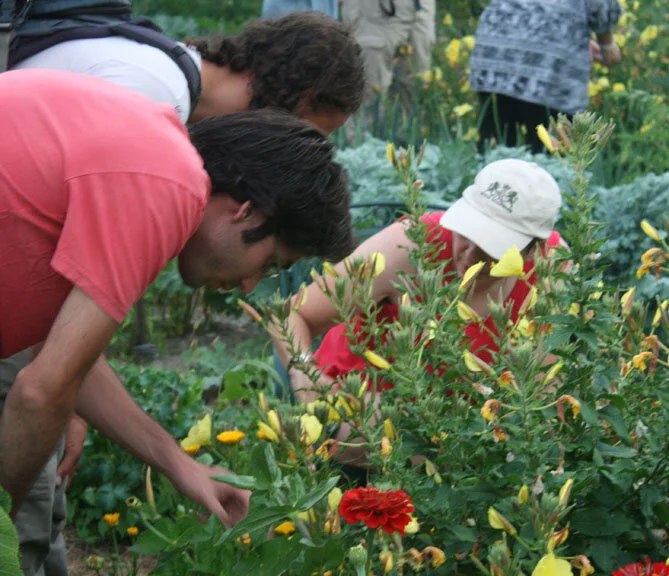
Teaching science — whether in middle school, high school, or college — is a challenge. And teaching it in a manner that allows students to experience and question the world is an even greater one. Too often their world is one in which receiving information takes precedence over active, self-directed exploration, a world in which nature unfolds its splendors in digitally enhanced magnificence on a flat screen, a world in which science is more a matter of answers than questions. How do we awaken in students a sense of wonder for direct experience? How can this grow into true interest that stimulates exploration and leads to deeper understanding and engagement in life?
Unfortunately, our modern culture and our educational system do little to prepare us to guide students along this path of experience-based learning. To question what we take for granted and to engage in open-ended inquiry is as much a struggle for the teacher as it is for students. Too many explanations can cloud our vision, just as too little insight can leave us blind. How do I as a teacher learn to see with fresh eyes? Can I learn to practice the capacities that I hope the students will attain?
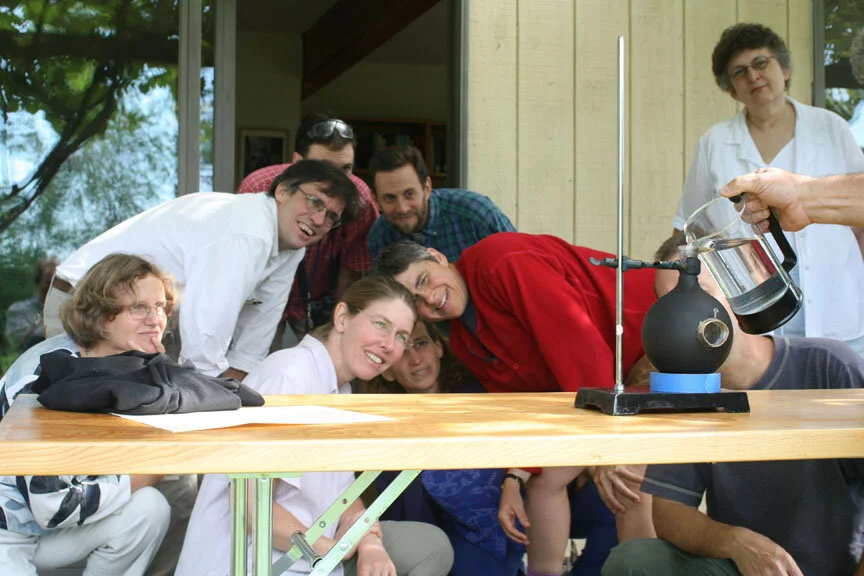
Bringing Science to Life addresses in week-long courses these questions in relation to science education. Most participants are high school teachers but the course is also attended by middle school teachers. The summer sessions are a mix of seminars, group project work, and dialogue. The seminars and projects explore the concrete practice of phenomenological methodology, the living relation between experience and scientific concept formation, and the spiritual psychology of learning.
Collegial dialogue is an important part of this course. Since peer exchange and active involvement in the learning process is an important and often neglected component of effective adult education, there is the opportunity to consider educational questions that the attending teachers feel to be most pressing in their day-to-day work.
For all participants, each week-long course (Sunday evening through Saturday midday) includes:
focus on one main topic (visual experience and light, warmth, air, water, our senses) in phenomenological science
psychology of learning
presentations by participating teachers
as well as:
project work in small groups on a specific subject
Course facilitators: Craig Holdrege, Henrike Holdrege, and Jon McAlice.
Some Comments from Participants
“I felt rejuvenated, empowered, and enlivened. I came away from the week’s experience with answers to questions that have gnawed at me for a long time.” — High school science teacher
“The course and its participants really exceeded my expectations in providing a sequence of discussions and presentations that addressed so many of my questions, and did so in profound ways…. I think I found a way to teach real things to my students.” — High school science teacher
“Overall, I felt that this course lifted the conglomeration of ideas, ‘indications,’ and methods of Waldorf education, which live within me as in a file cabinet, and brought for me an experience of a living thinking, of real imaginations, that can serve me in my teaching.” — High school science teacher